Published
- 3 min read
The Ultimate Hummingbird Feeder Cleaning Guide (Stop Mold Now)
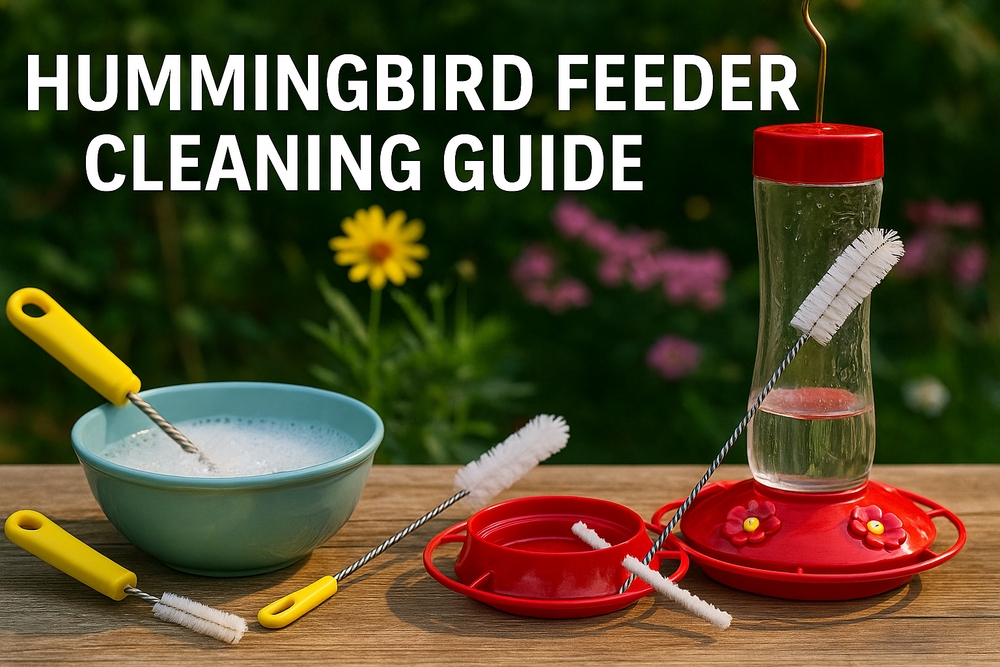
🧼 The Ultimate Hummingbird Feeder Cleaning Guide
I’m going to be blunt: If you aren’t going to clean your feeder, please take it down.
A dirty feeder is a death trap. Fermented sugar water causes liver damage. Black mold causes fungal infections that swell a hummingbird’s tongue until it starves to death.
Cleaning isn’t just “nice to have.” It’s mandatory. But it doesn’t have to be hard. Here is the fast, safe method to keep your birds healthy.
⏰ When to Clean?
- Cool Weather: Every 4-5 days.
- Hot Weather: Every 2-3 days.
- Visible Mold: IMMEDIATELY.
🛠️ The Cleaning Kit
You can’t clean a feeder with just a sponge. You need tools that reach inside the tiny ports.
- Bottle Brush: For the main reservoir.
- Port Brush: A tiny “mascara” wand for the flower holes.
- Vinegar: White distilled vinegar is safer than bleach.
🏆 Top Amazon Cleaning Tools
- ProBrush 37-Piece Set: Why buy one? This kit has brushes for every size nook and cranny.
- Songbird Essentials Dual Brush: A perfectly curved brush designed specifically for rounded feeder bottles.
- Mrs. Meyer’s Lemon Verbena Cleaner: If you hate the smell of vinegar, this natural soap rinses clean and is bird-safe (just rinse well!).
🚿 The 5-Step Deep Clean
Step 1: Dump & Rinse
Pour out the old nectar. Rinse with hot water. Do not put it in the dishwasher unless the manufacturer says it’s safe (most plastic melts).
Step 2: Disassemble
Take it ALL apart. Remove the bee guards. Separate the base. Mold loves to hide in the threads where the bottle screws in.
Step 3: The Soak
If there is crusted sugar or black spots, soak the parts in a bucket of 1 part vinegar to 4 parts water for 15 minutes. This kills the mold spores.
Step 4: The Scrub
This is where your Port Brushes shine. Scrub inside every feeding hole. Scrub the threads. Scrub the floating flowers.
- Tip: If you see black spots in the plastic that won’t scrub off, the plastic is compromised. Throw it away.
Step 5: The “Perfect Rinse”
Rinse. Then rinse again. Then rinse one more time. You want ZERO smell of vinegar or soap left.
Step 6: Air Dry
Reassembling a wet feeder traps tap water inside, which encourages mold. Let it dry completely on a rack.
🚫 3 Cleaning Myths
- Myth: “Bleach is best.” Fact: Bleach is toxic. If you don’t rinse it perfectly, it can harm the bird. Vinegar is much safer.
- Myth: “Soap doesn’t matter.” Fact: Birds hate the taste of soap. If they taste Dawn dish soap, they won’t come back.
- Myth: “The rain cleans it.” Fact: No. Just no.
Clean feeders = Happy, Healthy Birds.
Happy Scrubbing!