Published
- 3 min read
Glass vs. Plastic Hummingbird Feeders: Which Is Better? (2025 Review)
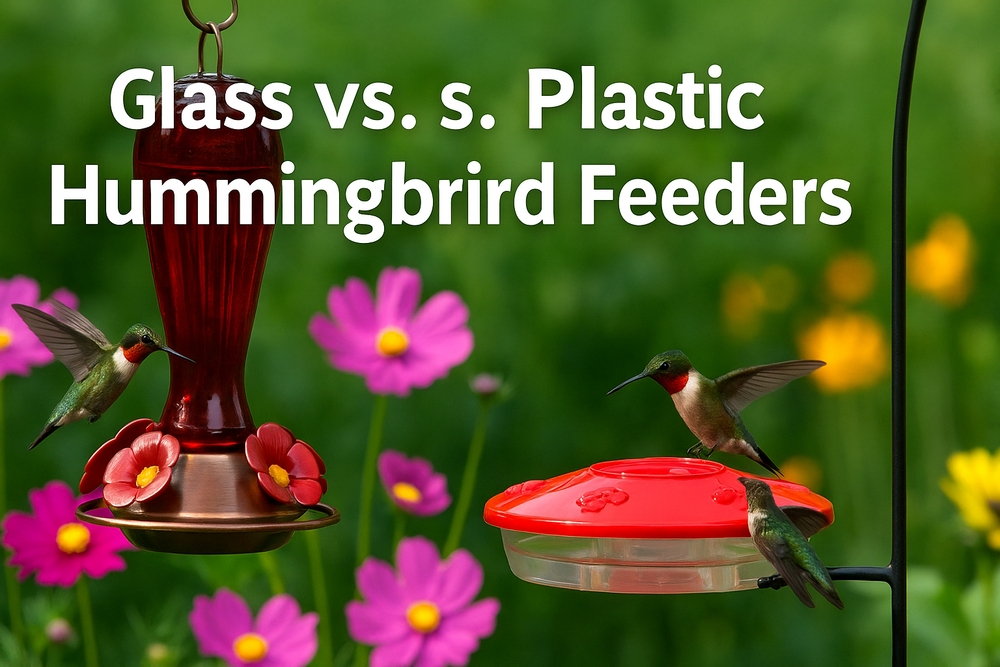
🥇 Glass vs. Plastic Hummingbird Feeders: Which Is Better?
When you walk into a garden center, you’re faced with a wall of feeders. Bright red plastic, hand-blown glass, vintage bottles… which one should you choose?
Is glass just a fragile luxury? Is plastic cheap junk? As someone who has tested dozens of feeders over the years, I can tell you: Both have a place in your garden, but for different reasons.
Here is the definitive breakdown to help you decide.
💎 The Case for Glass Feeders
Glass is the “gold standard” for serious birders.
✅ Pros:
- Hygiene: Glass is non-porous. It doesn’t scratch easily. Scratches in plastic are microscopic breeding grounds for black mold and bacteria. Glass sanitizes perfectly.
- Durability: Glass (especially thick glass) doesn’t degrade in UV sunlight. Plastic eventually becomes brittle, cloudy, and yellowed after a few summers.
- Chemical-Free: No risk of BPA or other chemicals leaching into the nectar when it gets hot.
❌ Cons:
- Weight: They are heavy. You need a sturdy hook.
- Breakability: If it falls on a patio, it’s game over.
🏆 Best Glass Feeder: Birds Choice Best-1
Simple, sturdy, and virtually indestructible (unless you drop it).
🥈 Runner Up: More Birds “Ruby”
Beautiful vintage red glass that sparkles in the sun.
🥤 The Case for Plastic Feeders
Don’t write off plastic! High-quality polymer feeders are excellent, especially for beginners or difficult locations.
✅ Pros:
- Indestructible: They can survive a fall, a squirrel attack, or a windstorm.
- Lightweight: You can hang them from small suction cups on a window or thin tree branches.
- Design Flexibility: Plastic allows for “Saucer” designs (dish feeders) which are the easiest to clean and leak-proof.
❌ Cons:
- Harder to Clean: You must scrub carefully to avoid scratches.
- Fading: The bright red color will fade to pink over 2-3 seasons.
🏆 Best Plastic Feeder: Aspects HummZinger (Saucer)
This is widely considered one of the best feeders ever made, period. It’s leak-proof, bee-proof, and practically unbreakable.
🥈 Runner Up: First Nature (High Capacity)
If you have a swarm of 20 birds, you need a 32oz bucket. This is the one.
🥊 Head-to-Head: The Verdict
| Feature | Winner | Why? |
|---|---|---|
| Cleaning | Glass | Sanitizes easier, doesn’t scratch. |
| Longevity | Glass | Doesn’t fade or crack in UV light. |
| Durability | Plastic | Won’t shatter if dropped. |
| Price | Plastic | Generally cheaper (but high-end plastic is similar). |
| Bird Safety | Glass | Less bacterial risk if you are lazy about cleaning. |
My Recommendation:
- Go with GLASS if you want a feeder that will last 10+ years and you are diligent about cleaning.
- Go with PLASTIC (High-Quality) if you want a saucer feeder (the HummZinger) or if you are hanging it over a hard concrete patio where glass might break.
Bottom Line: The birds don’t care about the material as much as the freshness of the nectar. Choose the one you will find easiest to clean!
Happy Birding!