Published
- 3 min read
Avoid These 5 Common Nectar Mixing Mistakes (Safe Bird Feeding)
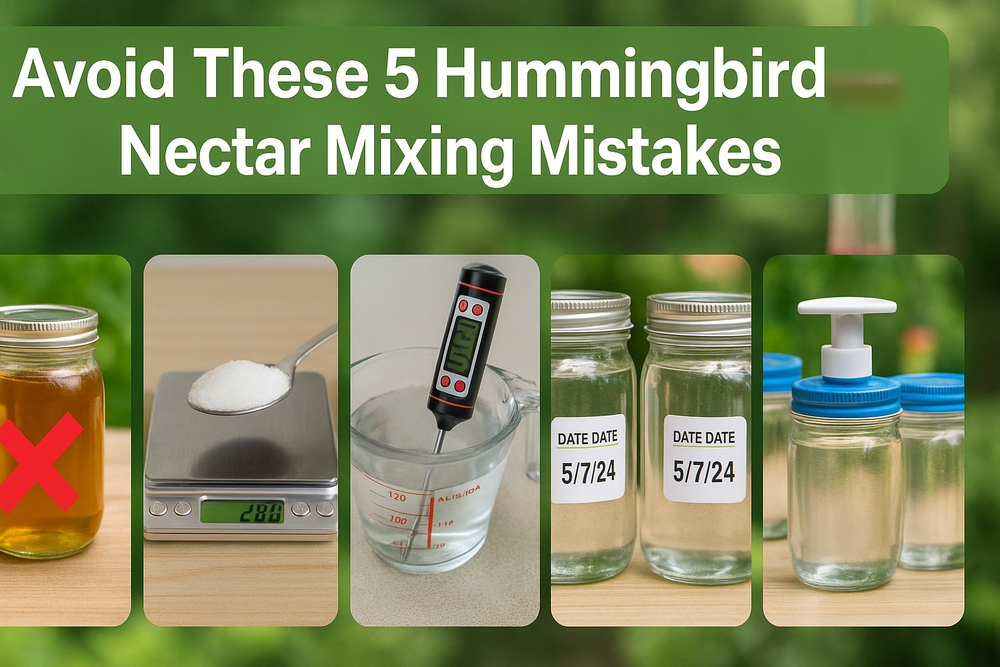
⚠️ Avoid These 5 Mistakes When Mixing Your Own Hummingbird Nectar
Making your own hummingbird nectar is one of the kindest things you can do for your backyard birds. It’s cheaper than store-bought, lacks harmful dyes, and mimics natural flower nectar perfectly.
However, because hummingbirds are so small and have such high metabolisms, even a small mistake in the kitchen can lead to serious health issues for them.
Here are the top 5 mistakes people make when mixing “sugar water” and how to fix them today.
1. ❌ Mistake: Using the “Kitchen Sink” Sugar
It’s tempting to grab whatever is in the pantry: brown sugar, honey, or that fancy organic “raw” sugar. Stop!
- The Danger: Brown sugar and raw sugar contain iron. While humans need iron, it is toxic to hummingbirds. Honey ferments instantly and grows a fungus that causes a fatal tongue infection.
- ✅ The Fix: Use plain white granulated sugar only. It is the closest match to the sucrose found in flowers.
- 🛒 Buy Domino Pure White Sugar
2. ❌ Mistake: Guessing the Ratio
”A scoop of sugar and a splash of water” isn’t good enough. If the nectar is too weak, the birds won’t get enough calories. If it’s too strong, it can cause kidney damage.
- The Danger: Dehydration or malnutrition.
- ✅ The Fix: Stick to the 4:1 ratio (4 parts water to 1 part sugar). Use a Digital Kitchen Scale for 100% accuracy every time.
3. ❌ Mistake: Mixing with Cold Tap Water
Stirring sugar into cold water often leaves undissolved granules at the bottom.
- The Danger: Undissolved sugar ferments faster and can clog feeding ports.
- ✅ The Fix: Boil your water first. This kills bacteria in the water and ensures the sugar dissolves completely into a clear syrup. Let it cool before filling the feeder!
- 🛒 Check Temp with a Digital Thermometer
4. ❌ Mistake: The “Mystery Jar” in the Fridge
We’ve all done it—pushed a jar of nectar to the back of the fridge and forgotten when it was made.
- The Danger: Feeding spoiled, fermented nectar that can sicken birds.
- ✅ The Fix: Label your jars! Nectar only lasts 7-14 days in the fridge.
- 🛒 Use Waterproof Date Labels
5. ❌ Mistake: Storing in “Smelly” Plastic
Nectar is mostly water, and water absorbs odors. If you store your nectar in an old plastic tupperware that once held chili, the birds will taste it.
- The Danger: Birds are sensitive to taste and will abandon your feeder.
- ✅ The Fix: Use Glass Mason Jars. They are non-porous and won’t leach plastic chemicals or old food smells into the nectar.
- 🛒 Buy Glass Mason Jars
📋 Summary Checklist for a Safe Batch
| Step | Action | Tool |
|---|---|---|
| Measure | 1 part White Sugar to 4 parts Water | Digital Scale |
| Dissolve | Boil water and stir until clear | Long Spoon |
| Cool | Wait until it reaches room temp | Thermometer |
| Label | Mark the date on the jar | Date Stickers |
By avoiding these five pitfalls, you aren’t just a bird feeder—you’re a bird protector.
Happy Mixing!