Published
- 5 min read
5 Common Hummingbird Feeder Mistakes & How to Fix Them (2025 Guide)
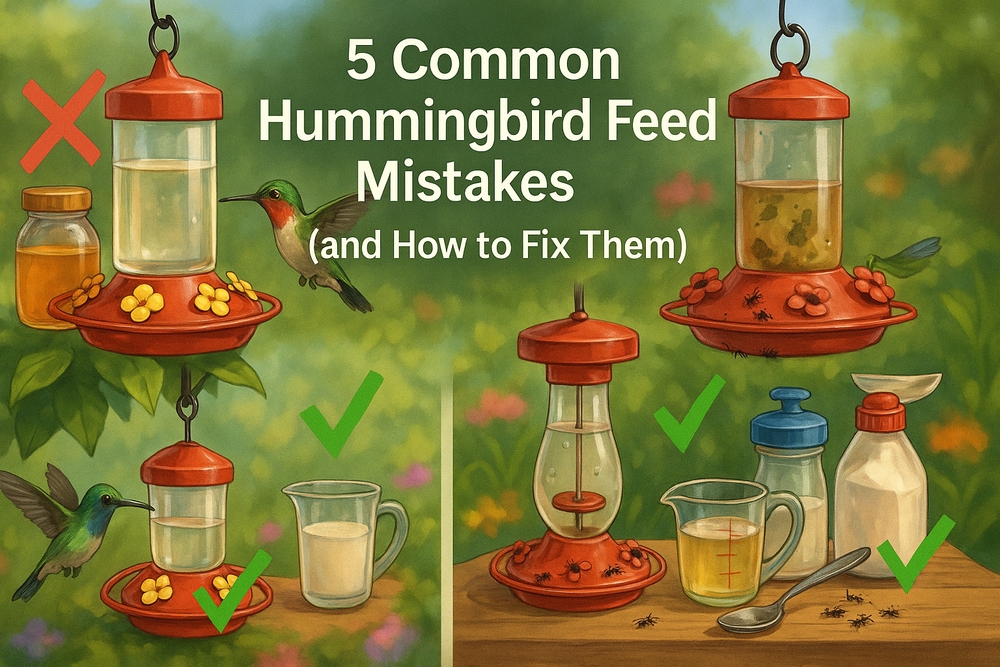
🛑 5 Hummingbird Feeder Mistakes You’re Probably Making (and How to Fix Them)
There is nothing quite like the excitement of hanging up a fresh hummingbird feeder and waiting for that first buzz of wings. But if you’ve noticed your local hummingbirds taking one sip and flying away—never to return—or if you simply aren’t attracting as many as you used to, you might be unintentionally making a few common mistakes.
Hummingbirds are incredibly sensitive creatures. Their high metabolism and small size make them vulnerable to spoiled food, predators, and even the wrong type of sugar. The good news? These mistakes are easy to fix.
In this guide, we’ll walk through the top 5 mistakes backyard birders make and how to correct them to create a safe, thriving sanctuary for your feathered friends.
1. ❌ Mistake: Using Honey, Brown Sugar, or Red Dye
For years, people believed that nectar had to be red to attract hummingbirds. We now know that’s not true. While hummingbirds are attracted to the color red, the feeder itself provides enough color. Adding red dye (specifically Red No. 40) is not only unnecessary but can be harmful to their delicate kidneys.
Similarly, honey and brown sugar are dangerous. Honey ferments rapidly, creating a breeding ground for deadly bacteria and fungus (like the one that causes tongue swelling), while brown sugar contains iron levels that are toxic to hummingbirds.
✅ The Fix: Stick to the “Gold Standard” Recipe
The closest match to natural flower nectar is simple: plain white granulated table sugar and water.
- Ratio: 1 part sugar to 4 parts water.
- Method: Boil the water to remove chlorine and impurities, dissolve the sugar, and let it cool completely before filling.
Tip: If you prefer the convenience of store-bought nectar, always read the label. Ensure it is clear (dye-free) and made from sucrose.
Recommended: If you don’t have time to mix your own, Kaytee ElectroNectar (Dye-Free) is a popular, safe choice that mimics natural nectar without the harmful additives.
2. ❌ Mistake: The “Fill It and Forget It” Mentality
It’s easy to top off a feeder and assume it’s fine as long as there is liquid inside. However, sugar water is a magnet for mold and fermentation, especially in the heat. Cloudy or moldy nectar can sicken a hummingbird quickly. If a bird tastes spoiled nectar, they often won’t come back.
✅ The Fix: Establish a Cleaning Routine
You need to clean your feeder more often than you think.
- Cool Weather (below 60°F): Clean every 4-5 days.
- Warm Weather (60°F - 80°F): Clean every 2-3 days.
- Hot Weather (80°F+): Clean every single day.
Scrub every nook and cranny. Black mold loves to hide in the feeding ports.
Tool Tip: A standard sponge won’t reach inside the tiny ports. We recommend the More Birds Combo Cleaning Brush Kit. It includes tiny brushes specifically designed for feeding ports—a game changer for hygiene.
3. ❌ Mistake: Placing Feeders in Direct Sunlight
Sunlight turns your feeder into a greenhouse. It heats the nectar, causing it to spoil and ferment within hours. Hot nectar can also burn a hummingbird’s tongue or simply be unappealing—like drinking warm soda on a hot day.
✅ The Fix: Seek the Shade
Hang your feeders in a spot that gets dappled shade or morning sun only. Under the eaves of a roof, a porch, or a leafy tree are ideal spots. This keeps the nectar fresh twice as long and gives the birds a break from the heat while they feed.
Feeder Tip: If you struggle with placement, the Aspects HummZinger HighView Feeder is excellent. It’s a saucer-style feeder (easy to clean) and incredibly durable, making it versatile for hanging in various shaded garden spots.
4. ❌ Mistake: Just “Topping Off” the Nectar
We’ve all been tempted to just pour fresh nectar on top of the inch of liquid left in the feeder. Don’t do it! That remaining liquid is likely already teeming with invisible bacteria. Mixing fresh nectar with old nectar just spoils the fresh batch immediately.
✅ The Fix: Empty, Rinse, Refill
Always dump out the leftovers. Rinse the bottle with hot water (no soap is usually needed if you do it often) before refilling.
Upgrade Tip: If you find plastic feeders hard to scrub, consider switching to glass. The Birds Choice Best-1 Glass Feeder is a favorite among experts because the glass bottle is easily sanitized and doesn’t scratch (scratches harbor bacteria!).
5. ❌ Mistake: Ignoring the Ant Invasion
Ants love sugar water just as much as hummingbirds do. If ants swarm your feeder, hummingbirds will leave. Ants not only contaminate the nectar but can also attack the birds.
✅ The Fix: Use an Ant Moat
An ant moat is a simple cup filled with water placed between the hanger and the feeder. Ants can’t swim, so they get stuck. Many modern feeders come with built-in moats, but if yours doesn’t, you can buy a separate one.
Pro Tip: Never use oil or grease on the pole. It can get on the hummingbird’s feathers and affect their ability to fly and regulate heat. Water is the safest barrier.
Must-Have Accessory: If your feeder is constantly under siege, the Perky-Pet AntGuard uses a mild permethrin barrier (safe for birds, bad for ants) to keep them away effectively if water moats aren’t doing the trick.
📋 Summary Checklist for Success
| Frequency | Task | Why? |
|---|---|---|
| Daily | Check for clarity | Cloudy nectar = bacteria. |
| Every Refill | Dump & Rinse | Prevents mixing bacteria with fresh food. |
| Weekly | Deep Clean | Use a vinegar/water solution to kill spores. |
| Monthly | Inspect Feeder | Check for cracks or rust that could hurt birds. |
Attracting hummingbirds is a rewarding hobby that connects you directly with nature. By avoiding these five common pitfalls, you ensure that your backyard remains a safe, healthy, and favorite stopover for these flying jewels.
Happy Birding!